



Amplified Here:
Russia invaded Ukraine, bombed its cities, and threatened its neighbors. So Trump’s envoys asked Moscow to help design Europe’s next security deal. The arsonist is now advising the fire department.
David’s piece looks at:
- what Putin actually wants from Europe
- why NATO’s eastern flank is alarmed
- what pro-Kremlin media say Putin’s Security Council just decided about Zelensky
- what a real peace has to include.
For $70 a year, you get independent progressive media that won’t confuse peace with capitulation.
Upgrade now and read the rest.
Once upon a time, American diplomats understood a basic proposition: When a thief breaks into your neighbor’s house, you do not invite that criminal to redesign the neighborhood security program. You certainly do not ask what sort of alarms the burglar prefers.
Yet, this is now the governing philosophy of the Trump administration.
Trump son-in-law Jared Kushner and Trump friend/real estate developer Steve Witkoff have been leading negotiations between Russia and Ukraine and recently engaged with Vladimir Putin about the future of European security.

According to recent reports, the Trump administration representatives sought Russian input on a new security arrangement for Europe.
The spectacle is difficult to comprehend. Russia invaded Ukraine, seized its territory, bombed its cities, murdered its civilians, and has spent years threatening the security of other European nations, especially those sending help to Ukraine. Yet now, the Trump clowns are treating Putin not just as a participant in negotiations but as an expert consultant on the proper organization of European security.

It is extraordinary. The arsonist has been invited to advise the fire department.
Kushner and Witkoff are hardly the diplomatic equivalent of George Kennan (U.S.
diplomat known for the Cold War strategy of containment) or Dean Acheson
(Truman’s secretary of state who helped form NATO). The Kushner/Witkoff records
offer no evidence of experience in international security that would qualify
someone to negotiate the future of an alliance system involving dozens of
nations and the security of hundreds of millions of people. Their only
qualification appears to be their allegiance to Donald Trump. In other words,
Kushner and Witkoff aren’t reassuring even to begin with.
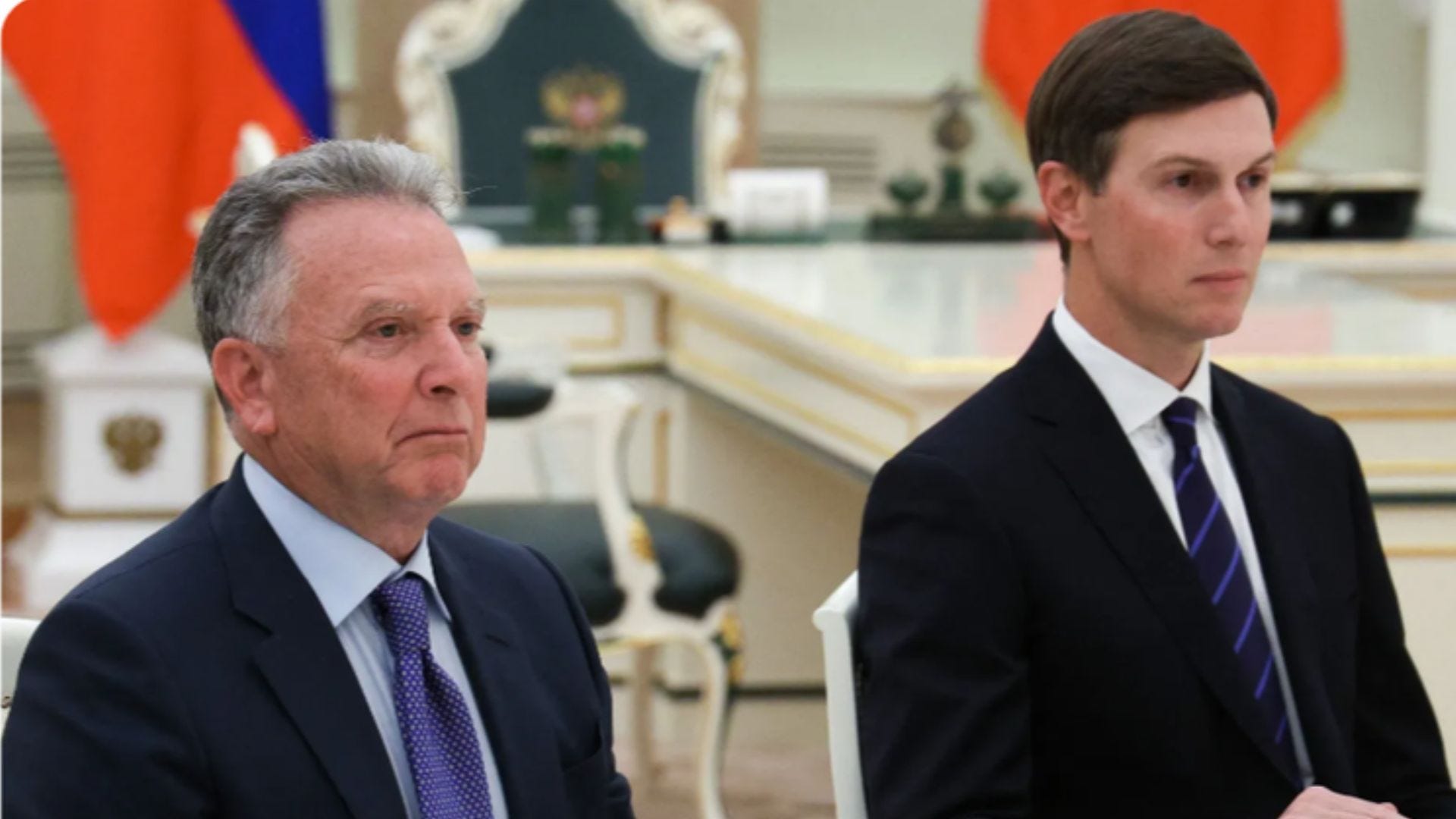
The issue is not whether American representatives or even Trump stooges should talk to Putin. They should. Diplomacy requires talking to unpleasant people, including dictators who have demonstrated an enthusiasm for violence. The issue is whether American negotiators understand the difference between listening to an adversary and allowing the Russian tyrant to dictate the terms of the discussion.
