

Bruce Springsteen and Billy Bragg Give Minneapolis a Voice
Two legends. Two deaths. One city. And the return of protest songs.


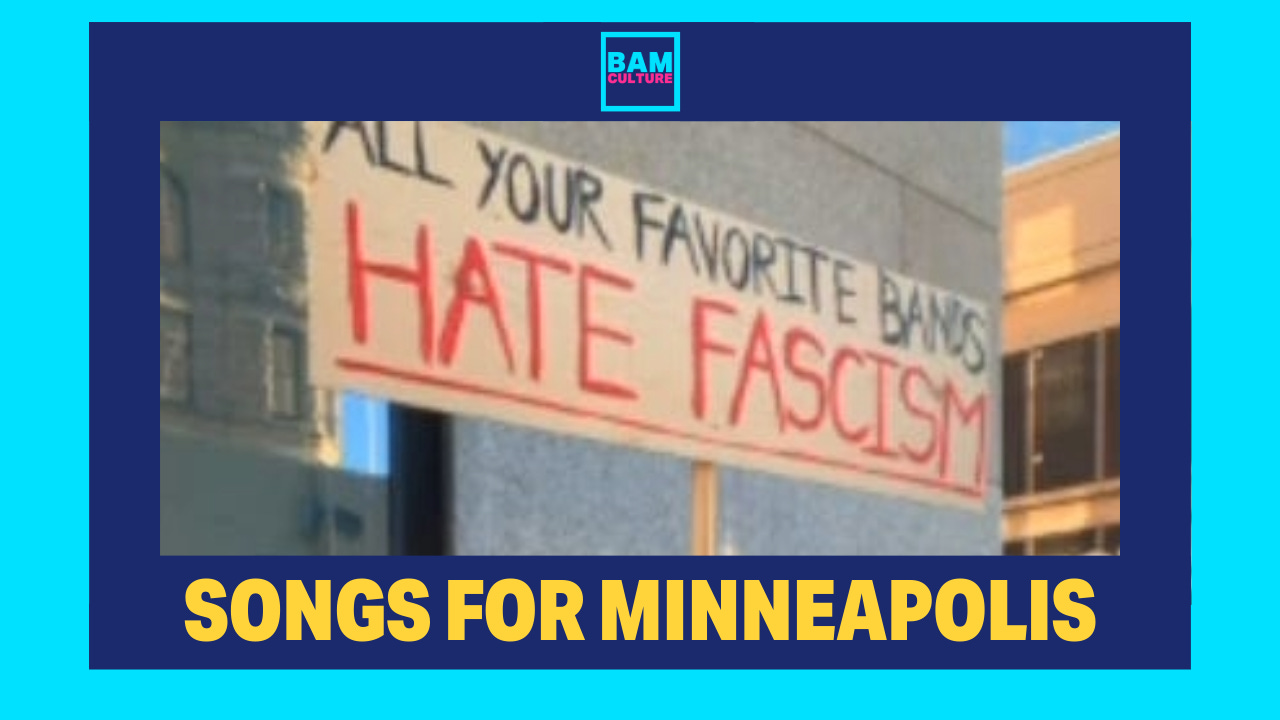

It’s been a long time since I’ve heard a truly great protest song.
Not a vague anthem nor a coded metaphor. But a protest song that names names, chooses sides, and bears witness.
And then this week, we got two.
Bruce Springsteen and Billy Bragg—two of the most morally serious songwriters of the last half century—have both released songs responding directly to the ICE protests in Minneapolis. Both center the same brutal truth: two people, Renee Good and Alex Pretti, are dead.
Out of great tragedy—and extraordinary bravery by the people of Minneapolis—has come great art.
Springsteen’s “Streets of Minneapolis” is written like a field report from a war zone. It moves street by street, night by night, naming Nicollet Avenue, smoke, rubber bullets, bloody footprints. He does what Springsteen’s always done best: to turn a city into a chorus. “Oh, our Minneapolis, I hear your voice,” he sings, and suddenly the city isn’t a place, it’s a witness.
Most strikingly, he names the dead:
“And two dead, left to die on snow-filled streets / Alex Pretti and Renee Good.”
The naming of the fallen is an old protest tradition and Springsteen uses it with gravity. His song frames the violence not as chaos but as power: “King Trump’s private army from the DHS,” “dirty lies,” “occupier’s boots.”
It’s a song of documentation and mourning. The chorus doesn’t just remember: it records.
Billy Bragg’s “City of Heroes” comes at the same moment from a different angle. Where Springsteen bears witness, Bragg calls for confrontation. His song opens with the ghost of Martin Niemöller and the warning of historical silence. It’s built on moral escalation: what do you do when they come?
And his answer is blunt:
“I got in their face.”
Over and over again, that line becomes the song’s rallying cry, delivered with Bragg’s inimitable Essex accent, raw voice, and moral clarity.
Where Springsteen’s song sounds like a lament, Bragg’s sounds like a chant. His heroes aren’t martyrs; they’re neighbors. The city isn’t something to be remembered. It’s something to defend. The repeated lines about tear gas and phones, cars and homes, children and families make the song feel like a live dispatch from the crowd.
Lyrically, the contrast is powerful. Springsteen writes from the vantage of aftermath and memory—a chronicler of names, dates, and blood in the snow. Bragg writes from the vantage of the crowd—a participant, not a narrator.
Springsteen says: We will remember.
Bragg says: We will resist.
Both are protest songs, but they work different muscles of conscience. One preserves history. The other activates it.
We need both.
And the speed of these releases matters. These events just happened days ago, and we already have a musical archive and tribute of the events. That’s astonishing. It means these aren’t polished museum pieces. They’re urgent responses. They demonstrate what it looks like when legends refuse irrelevance—when craft meets courage, when artists speak truth to power without fear of the consequences.
These songs don’t humor the listener, and they don’t mince words about the instigators. They don’t pretend this moment in history is complicated.
They say: people were killed.
They say: this is happening here.
They say: any silence has consequences.
This is the stuff of legends — not because it’s perfect, but because it’s necessary.
But don’t take my word for it.
Go listen to Bruce and Billy’s words. They gave me hope, and they made me cry. I didn’t realize how much I needed this cathartic release until I felt it.
Author note: Through writing this story, I realized Billy Bragg is on Substack (!!!), and posted about this song just days ago. I strongly recommend you have a read, and go subscribe.


Greetings!
I’m Dana DuBois, a GenX word nerd living in the Pacific Northwest with a whole lot of little words to share. I’m the co-host of The Daily Whatever Show and Editorial Director here at Blue Amp Media. I write across a variety of topics but parenting, music and pop culture, relationships, and feminism are my favorites. Em-dashes, Oxford commas, and well-placed semi-colons make my heart happy.
If this story resonated with you, why not buy me a coffee?
Read More Blue Amp Media
Want to go deeper? These Blue Amp Media stories explore the same themes of accountability, courage, and democratic renewal from different angles.

This harks back to 1970 when Neil Young wrote "Ohio" after seeing the photos from Kent State in Life Magazine. He wrote it and recorded it with the rest of Crosby Stills Nash & Young in only a couple of takes, and released it as a single within days. Joan Baez name the victims of the 16th Street Church bombing in Birmingham, AL in "Birmingham Sunday" (which has been covered by several artists but none as artfully (in my opinion) as Rhiannon Giddens.
https://youtu.be/4_T5KlTpvoM?si=BOH7ZkliiTORX2Y6
Music has always been the voice of protest. Now is no different.
Bravo! An important read....Having lived through the 60's and 70's I saw first hand the power artists could wield in the name of social justice. Back then the civil rights movement and the Vietnam war were sparking unrest on college campuses, an unrest that had its soundtrack provided by Pete Seeger, Bob Dylan, Crosby Stills Nash and Young, Joan Baez, Sam Cooke and Barry McGuire, to name but a few. The words of Springsteen and Bragg brought back the feeling of outrage I felt back then. I hope their work sparks more of it today.